
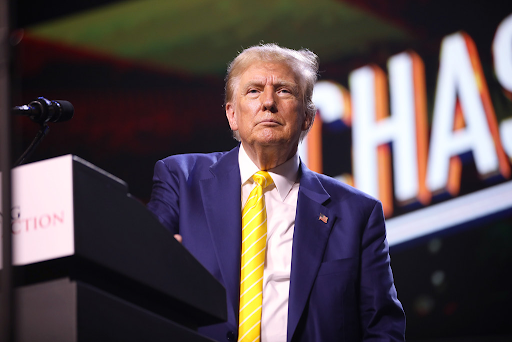
President Trump’s announcement of a 15% universal tariff Saturday was framed not as a defensive maneuver following a Supreme Court defeat, but as the opening move in a broader campaign to permanently reshape American trade law. The president vowed his administration would use the 150-day window provided by the new tariff authority to build a lasting, legally airtight framework.
The new tariff relies on Section 122 of the Trade Act of 1974, a provision that permits up to 15% levies for 150 days without congressional approval. After that deadline, the administration must seek legislative authorization. Trump described the provision as “fully allowed and legally tested,” though legal scholars noted it has never before been used by any president and may itself attract judicial scrutiny.
The Supreme Court’s 6-3 ruling Friday had determined that the IEEPA-based tariffs Trump introduced last year required congressional authorization he had not obtained. Trump responded by calling the ruling “extraordinarily anti-American” and launching personal attacks on majority justices, particularly reserving public scorn for his own nominees Amy Coney Barrett and Neil Gorsuch.
International allies called for an end to the instability. Germany’s Chancellor Merz announced a visit to Washington to present a joint European position, warning that constant tariff shifts were economically toxic. France’s Macron praised the court’s original ruling and urged that trade policy be governed by reciprocity rather than unilateral executive action. The UK, holding a now-outdated 10% agreement, faces an uncertain renegotiation ahead.
With 90% of the $130 billion in collected tariffs absorbed by US businesses and consumers, the new rate promises to deepen domestic economic pain. Exemptions cover critical minerals, metals, pharmaceuticals, and USMCA-compliant goods from Canada and Mexico. Sector-specific tariffs on steel, aluminum, lumber, and autos remain in place, unaffected by the court’s ruling.