
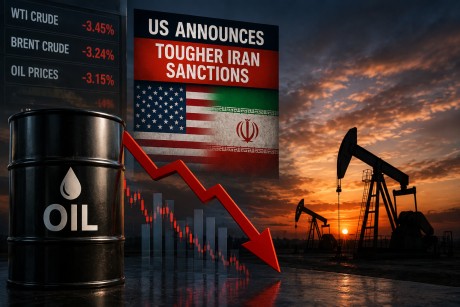
Oil prices experienced a significant drop of over 3% on Tuesday, hitting their lowest point in a week as investors evaluated the implications of new U.S. sanctions against Iran. This decline follows a period of substantial gains for the oil market last week. Brent crude, the international standard, decreased by 3.1% to $89.31 per barrel, while West Texas Intermediate (WTI) fell by 3.34% to $82.17 per barrel. Previously, Brent had climbed 6.6% and WTI had risen by 5.7%, marking strong upward momentum.
The recent downturn in oil prices coincides with the United States’ recent expansion of sanctions targeting entities and nations engaged in economic dealings with Iran. These measures are designed to exert further pressure on Tehran amid ongoing geopolitical tensions. The sanctions aim to disrupt Iran’s economy, raising questions about their potential impact on Iranian oil exports.
Developments in the Strait of Hormuz, a crucial global energy corridor, continue to influence oil market dynamics. Iranian authorities have threatened to halt oil shipments through this strategic waterway if Washington intensifies its pressure campaign. This has heightened concerns about potential disruptions to oil supplies, contributing to market volatility.
In addition to geopolitical tensions, shipping security risks have escalated. Reports indicate that a tanker was struck near Oman’s Musandam peninsula, further compounding uncertainties. Additionally, repeated attacks in the Red Sea have added another layer of risk to global energy supplies, complicating the outlook for oil markets.
Despite these challenges, the recent decline in oil prices reflects traders’ focus on the broader consequences of the new sanctions. Market participants are closely monitoring whether these measures will have a substantial effect on Iran’s ability to export oil, which remains a key factor in the overall supply and demand balance.