
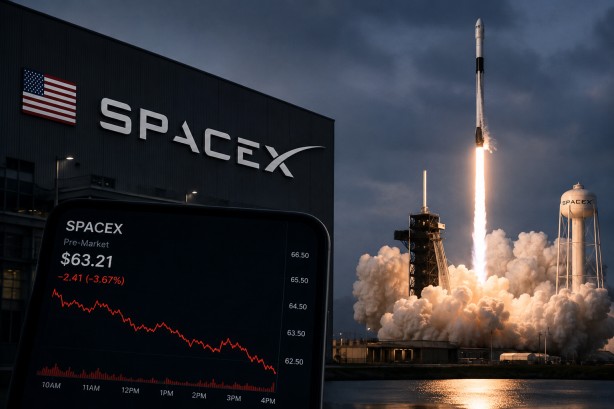
SpaceX is bracing for potential market turbulence as up to 911.5 million shares become eligible for trading, offering some employees and early investors the chance to sell shares obtained before its historic IPO. This development follows a sharp 14% drop in SpaceX’s stock on Wednesday, closing at $108.27. The decline, which is the company’s second-largest single-day fall, leaves the stock roughly 20% below the initial IPO price of $135, just weeks after SpaceX made its public market debut.
The company had initially released only a small fraction of its shares for public trading, which created a limited supply and fueled high demand post-IPO. With the impending release of a larger number of shares, the market could experience increased short-term volatility. However, not all 911.5 million shares will be sold immediately, as employees and early investors have the option to hold onto their shares or sell them. Those who purchased shares at lower valuations pre-IPO might be tempted to cash in their profits now.
SpaceX has opted for a staggered approach to releasing restricted shares rather than a single, traditional lock-up period. This strategy means additional share releases are scheduled for later this year, potentially increasing the number of Class A shares available for trading by billions. Key figures like Elon Musk and other senior executives will see their shares remain locked up for longer, with their future releases being of significant interest to investors given Musk’s substantial stake in SpaceX’s total value.
The increased availability of publicly traded shares could influence SpaceX’s position in the Nasdaq-100 index. Currently, SpaceX has a weighting of around 1% in the index, which could rise to over 3.5% depending on future stock prices and share availability at the next index adjustment. While the influx of shares might induce temporary selling pressure, it does not impact SpaceX’s core business operations. Investors are expected to keep their eyes on the company’s financial health, growth trajectories, AI investments, and execution of long-term strategies.