
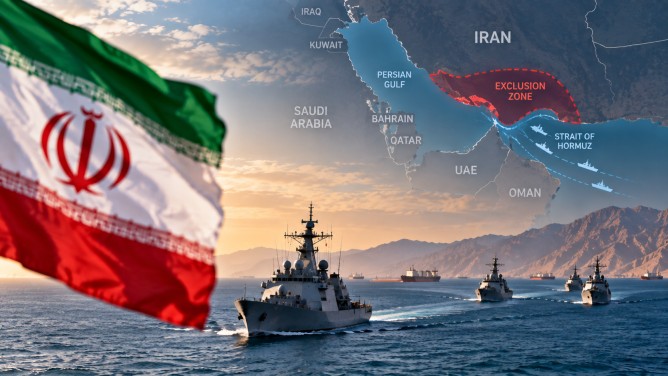
Iran has declared its intention to create a new “exclusion zone” in the vicinity of the Strait of Hormuz, a critical maritime passage, targeting vessels that it suspects are attempting to navigate through the channel. Mohsen Rezaei, who recently assumed leadership of Iran’s Supreme National Security Council, indicated that this zone would stretch from the U.S. naval blockade area toward the Strait of Hormuz and into the Arabian Gulf. According to Rezaei, ships identified as entering this zone with plans to cross the strait might find themselves added to an Iranian sanctions list.
This development comes after an escalation in hostilities, highlighted by a U.S. military strike on three Iranian oil tankers in response to Iran’s ballistic missile attacks on U.S. warships. Additionally, Iran has claimed it successfully targeted an unmanned U.S. vessel attempting to enter the strait, although this assertion has been denied by the U.S. military. The Strait of Hormuz remains a vital conduit for global oil and gas transportation, and any disruptions in this area have the potential to impact energy prices and the global economy significantly.
In response to the heightened tensions, the United States has bolstered its naval presence to maintain a blockade of Iranian ports, aiming to thwart Tehran’s oil exports. Washington has simultaneously intensified economic sanctions on Iran following the breakdown of diplomatic talks. Despite these measures, U.S. officials report that substantial quantities of oil continue to flow through the Strait of Hormuz, assisted by naval escorts and alternative regional pipeline routes.
Rezaei emphasized Iran’s ongoing commitment to diplomacy, albeit with a focus on securing more robust guarantees in any future negotiations. The discussions between Washington and Tehran have reached an impasse, with both sides consistently accusing each other of breaching agreements. While the situation remains tense, the continued passage of oil through one of the world’s most crucial waterways underscores the strategic importance of the Strait of Hormuz in international trade and energy markets.